⚡ Cutting through noise. Spotlighting the truth.

Rubio shakes up state dept with layoffs

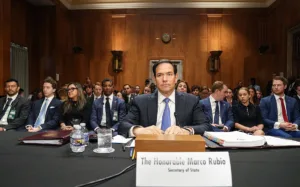
It finally happened. State department layoffs are no longer a rumor or Beltway buzzword. They’re a seismic shift, reshaping not just Foggy Bottom but the entire landscape of federal employment. The July 2025 pink slips handed out by Secretary Rubio mark the sharpest downsizing in modern State Department history. Unthinkable just a few years ago, these cuts now bring profound consequences for American diplomacy.
The Biggest Reset in State Department History
For decades, the State Department ballooned in size and mission. Program piled on program, creating an entrenched bureaucracy. The scale of these state department layoffs shocked even long-time critics of government excess. More than 1,100 civil servants and 246 foreign service officers lost their jobs outright. Toss in voluntary resignations and the total climbs toward 3,000 departures.
Rubio and his team insist this move clarifies priorities and hacks away decades of dead weight. The deepest cuts? Bureaus that rarely faced much scrutiny: Energy Resources, Democracy, Human Rights and Labor, Population, Refugees and Migration, with significant trims to Consular Affairs and management support. Even high-profile Foreign Service Internship and Pickering programs, supposedly building the next generation of diplomats, weren’t safe.
Supporters call it overdue. Efficiency, they argue, comes not from endless headcount, but from focused missions manned by lean teams built to win. Critics see a haphazard culling of specialized offices handling global crises, issues that don’t wait for Washington’s reorganization to finish.
How the Supreme Court Transformed Washington’s Playbook
This wasn’t just Rubio’s shake-up. A Supreme Court decision supercharged the reorganization, greenlighting sweeping reductions in force. The ironclad protections federal workers once took for granted—now up for renegotiation. The message is blunt: government jobs are no longer safe havens for life.
These state department layoffs set the tone for federal downsizing across the spectrum. Over 275,000 civil service positions landed on the chopping block, as first reported by GovExec and Politico. This trend doesn’t stop here.
Washington holds job security and slow, incremental change sacred. Tradition is colliding with an administration both Trump in the White House, Rubio at State are intent on rebalancing the federal Leviathan. Momentum is with those pushing for leaner government.
Cost, Consequences, and American Influence
So, who comes out ahead? On paper, the taxpayer. The pitch: a more focused, less wasteful diplomatic corps. Rubio frames it as a correction after 25 years of unchecked growth. Fewer redundancies, clear lines of authority, sharper execution on real priorities.
The skepticism is real. Talk of “greater efficiency” rarely matches ground truth. Many layoffs fell hardest on the offices focused on democracy-building, refugees, humanitarian assistance, and handling crises that flare up without warning.
Bipartisan critics and former officials warn America’s global reach could suffer. Former CIA Director and Ambassador William Burns put it in plain English: “The future of our diplomatic service is uncertain at exactly the moment we need it, a weakened foreign service means a weakened America.” That warning isn’t coming from an ivory tower.
Historic Government Downsizing Hits Home
All of this plays out against the most aggressive round of government cutbacks since the post-Cold War era. The Supreme Court’s endorsement of federal RIFs emboldened managers across agencies. Like Politico noted, this approach is relentless and fast-moving, with the full impact still taking shape.
Layoffs tear through morale, talent pipelines, and legacy programs. The price of flattening agencies like USAID isn’t just in dollars. It’s lost know-how and abandoned missions. Over 1,800 experienced hands saw the writing on the wall and took buyouts or early retirements, choosing dignity over the uncertainty of forced exits.
What Everyday Diplomacy Looks Like Now
Out in the field, what do these changes mean? Leaner divisions must do more with less. That’s more work, less certainty, and a steep learning curve for new or reassigned staff parachuted into tough assignments.
But let’s not pretend bureaucracy itself solved anything. For years, the State Department piled on staff hoping sheer numbers would win the day. The real measure? Whether the slimmed-down agency can still pull its weight in global trouble spots where speed and expertise matter.
The Political Calculus Behind the Layoffs
Timing is everything. Senate Democrats wasted no time hammering the layoffs as an attack on American soft power. Career diplomats, whispering to Reuters and Politico, worry the moves leave the US flat-footed as rivals gear up for new challenges.
Republicans and conservative analysts respond with a simple question: Was the bloated status quo defensible? Endless regional desks, layer upon layer of staff, a tangle of half-coordinated initiatives—the time for reform is long overdue.
For Rubio, these cuts are as much about political branding as policy. His team touts voluntary exits and deferred departures as evidence of a fair process. Critics within the building say the leaner department is still racing to keep up with international threats.
Rubio’s Vision Put to the Test
Rubio isn’t just trimming headcount. He’s making a point. The message: Leaner really is better. Taxpayers are tired of a State Department where lifelong bureaucrats steer the ship. The case for a smaller, nimbler force grows stronger as old models break down.
But this is a gamble. With fewer staff, the risk runs high with missed warning signs, slow-footed responses, and fumbles when crisis hits. Shedding the deadwood works only if your best players are left standing.
Reader Questions Answered
How many employees did the State Department lay off in 2025?
The official count: 1,107 civil servants and 246 foreign service officers. Add in voluntary resignations and the total reaches about 3,000.
Why did Marco Rubio initiate layoffs at the State Department?
Rubio set out to cut redundancy, sharpen the agency’s mission, and push resources where they matter most.
Which State Department bureaus were most impacted by the layoffs?
Energy Resources, Democracy, Human Rights and Labor, Population, Refugees and Migration, plus major trims in Consular Affairs saw the deepest cuts.
What is a reduction in force (RIF)?
A RIF eliminates government jobs, typically during reorganization or budget cuts. It can mean layoffs or forced early retirement.
The Voices That Matter
William Burns, former CIA director and ambassador, said it plainly: “The future of our diplomatic service is uncertain at exactly the moment we need it, a weakened foreign service means a weakened America.” Ignore that warning at your peril.
Jessica Donati, reporting for Reuters, wrote: “This marks both an unprecedented organizational shift and a test for America’s diplomatic resilience in a rapidly changing world.” In today’s Washington, rapid change is the only constant.
The Real Takeaways
- The state department layoffs are the largest in modern history, ushering in a leaner era for American foreign policy.
- Cuts hit overlapping and low-priority offices—along with some critical bureaus suddenly running with less capacity.
- The Supreme Court’s green light on RIFs points to more federal shakeups ahead.
- More than 3,000 employees are out, including top-tier talent who took early retirement or buyouts.
- The final verdict is still coming: can America’s diplomats accomplish more with less, or will downsizing hollow out America’s global presence?
Sources and Further Reading
-
GovExec: State Department tells employees mass layoffs are imminent
-
CBS News: State Department Trump administration starts layoffs in coming days
More from SpotlightX: